
Untitled (Perfect Lovers)
Félix González-Torres

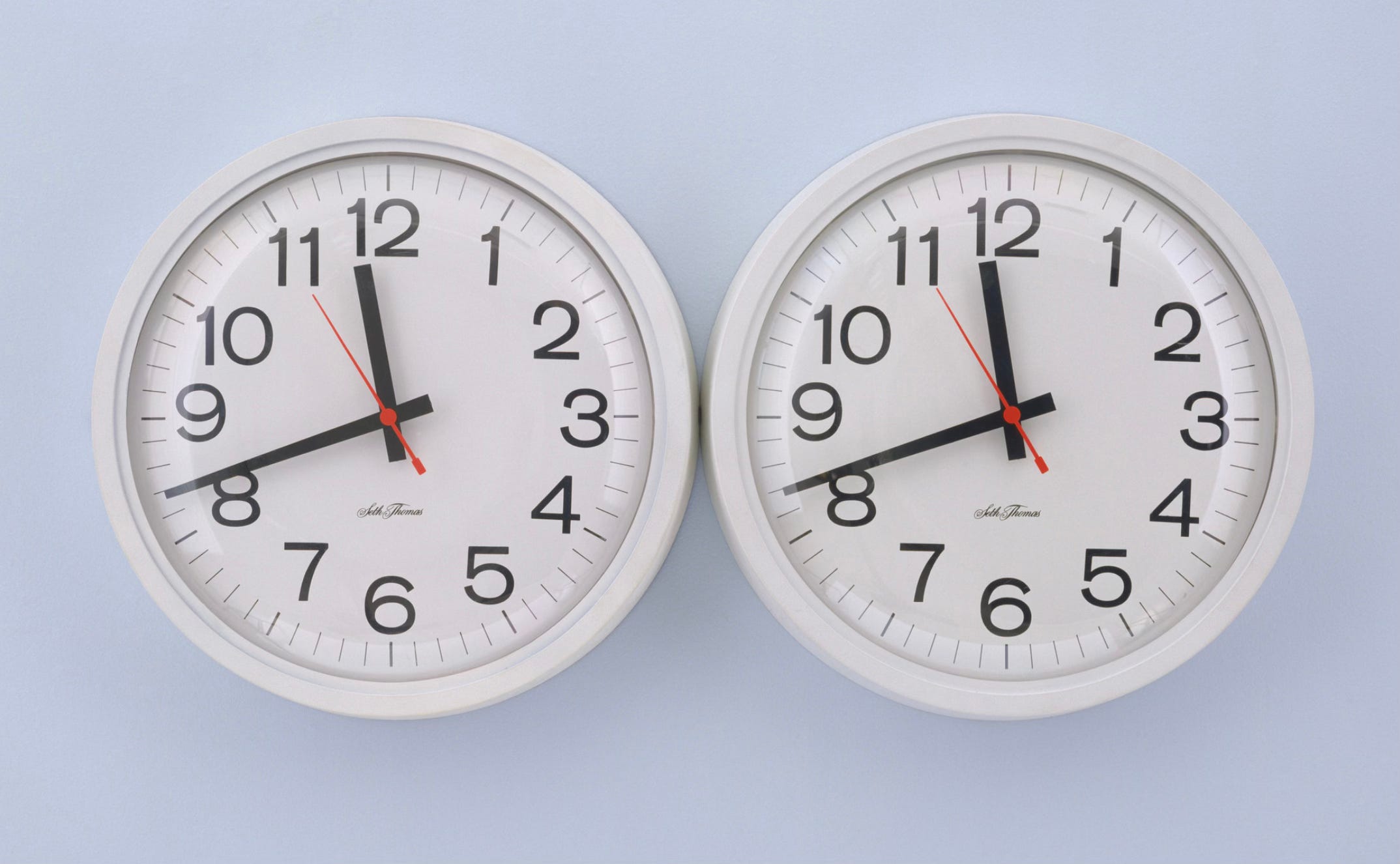
“Untitled” (Perfect Lovers) (1987-1990)
Dallas Museum of Art:
Two synchronized clocks, like those typically found in offices and public spaces, are displayed side by side. One will inevitably stop before the other. The date of this work corresponds to the time during which Félix González-Torres's partner, Ross Laycock, was ill, and it embodies the tension that comes from two people living side-by-side as life moves forward towards death. Laycock died of AIDS 6 years before González-Torres's own death in 1996.
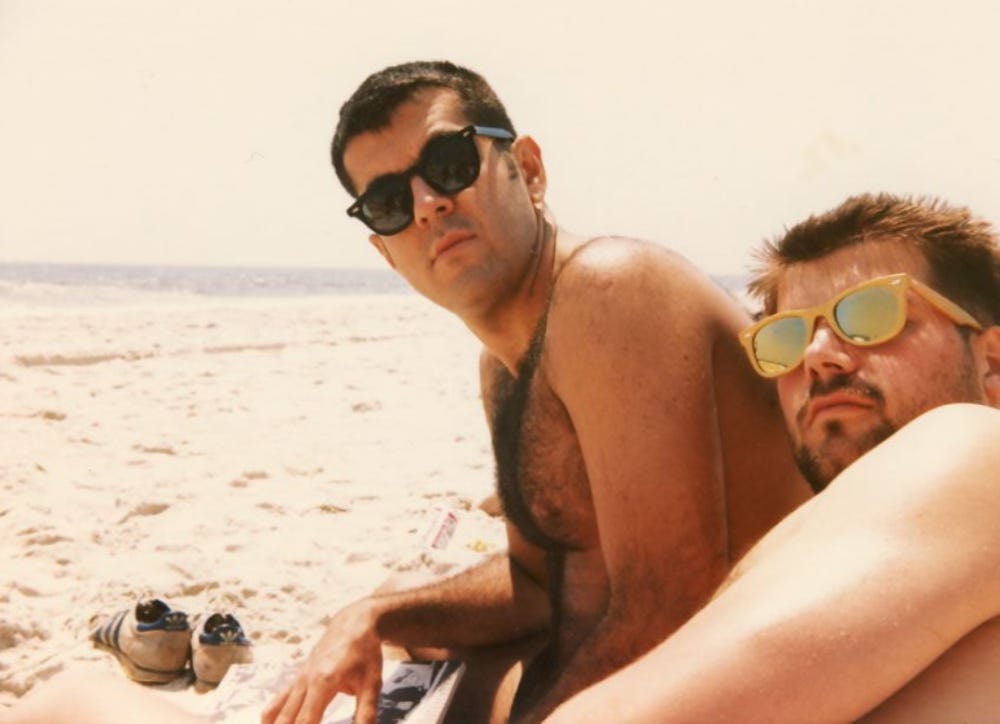
Felix Gonzalez Torres and Ross Laycock at Jones Beach, NY in 1986 - Image courtesy of Carl George
Don’t be afraid of the clocks, they are our time, the time has been so generous to us. We imprinted time with the sweet taste of victory. We conquered fate by meeting at a certain TIME in a certain space. We are a product of the time, therefore we give back credit where it is due: time. We are synchronized, now forever. I love you.
—Félix González-Torres

Other quotes by Torres:
Above all else, it is about leaving a mark that I existed: I was here. I was hungry. I was defeated. I was happy. I was sad. I was in love. I was afraid. I was hopeful. I had an idea and I had a good purpose and that’s why I made works of art.
From an interview with Hans-Ulrich Obrist:
Well, I mean—again—it’s part of our language structure: how we see things and how we don’t see things, right? In our culture, we’re not supposed to see—or we don’t usually see—a clock as something personal, right? What’s personal, what’s public, what’s not personal is always pretty much defined by our culture. But what defines who we are is not just what we have here, but also what we are not, right?
So if I’m here, and then I was trying to define myself—which it will take me a long time—I’m also defined by not being that chair that is there, or by not being that camera that is doing this recording, right? But at the same time, lots of objects are invested with a lot of very personal and very emotional context.
And as Roland Barthes says, “All these objects, they have a language, they speak a language, and it’s the language that we put into that,” right?
When Ross died, and I was in Toronto, and I was wondering suddenly, What am I going to take back with me? I didn’t take back anything. I just left everything there. I left everything—absolutely everything. I only took back a photo of Piss Christ that Andres Serrano has given us, because Ross wanted to donate it to the International Center of Photography.
But it was because I looked around and said, “Okay, I’m going to take those glasses, I’m going to take that vase, I’m going to take those plates, I’m going to take that chair.” But then suddenly it doesn’t make any sense, because then I say, “Well, I also want to take the room,” and the room has meaning, and it has a very specific feeling because of the window. And also the window—outside the window—there is a beautiful maple tree that I also wanted to take. And then there’s also the house in front of the street that I also wanted to take, and then the whole street, and then the lady that also goes down to the supermarket—that’s all part of the meaning of this place.
And at the end, of course, I will probably have to end up bringing back with me to New York the whole city of Toronto, and that’s a little bit difficult. So I decided not to take anything, because all those objects had a meaning not only by being there themselves, but also in relationship to another object.
And a light string is something that we don’t have to go too far to explain what they mean. I mean, when you see the light strings—because a party is about to take place—there’s some kind of feast, some kind of fair. And the same thing with some of the other materials I have used: candies, cut papers, clocks, and curtains, beads, and now billboards—stuff that is there.
And the thing with Vienna and the Austrian Airlines project is that, as you know, the Austrian Airlines logo has to be there on the billboard. So I am someone who says that it’s better to embrace the monster than to reject it in order to suppress them. So I said, well, if I’m going to be doing something for Austrian Airlines that has to have the logo, I might as well just go all the way and do this piece based on Austrian Airlines.